


Exercise on Your Own
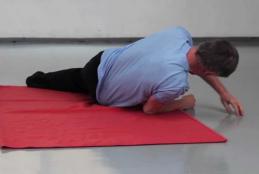
More information about doing Somatic Exercises on your own, coming soon.



Introductory information and articles about somatics.
More information about doing Somatic Exercises on your own, coming soon.
More information on products coming soon. Click here to shop for Somatic Exercise products.

One of the most ancient and famous of riddles is that of the Sphinx: "What is it that has one voice and yet becomes four- footed and two-footed and three-footed?" In Greek mythology, Oedipus provided the correct answer: the human being, who crawls on all fours in infancy, walks on two legs in adulthood, and leans on a cane in old age. This answers the riddle of the sphinx. But it does not answer a second riddle that lurks within the first: Why is it that humans, having learned to walk upright, may lose this ability and often end up walking with a cane?

Somatic Exercise classes are one of the most fun ways to enjoy the benefits of Somatic Exercises. If you have not read about Somatic Exercises before, these are the "self-help" version of the therapeutic Somatic movements. With or without attending hands-on sessions in Somatics, there are vast collection of movements you can do on your own, which give many of the benefits of hands-on Somatics work. The movements are easy and comfortable, yet very effective. They can be a valuable complement to hands-on sessions, or an affordable alternative. They can also be part of healthy lifestyle that includes Somatics, the way many include the gym or regular yoga classes. In the case of Somatics, however, the Somatic Exercises will support all those other fitness activities, making them easier and more beneficial, and launch you ahead in many fitness goals, including flexibility, injury prevention, and great strength and coordination.
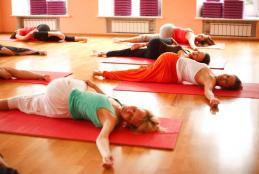
Somatic Exercises are movements a person can do that are similiar in form and pattern to the hands-on sessions. Instead of the sensory input and contractions provided by a practitioner, the Exercises use gravity and the person's own attention and activity to create the sensory-motor signals sent to the central nervous system. Just as in the hands-on sessions, these signals provide the neccessry bio-feedback and other neuromuscular diagnostic information to the brain to enable it to correct chronic contractions, faulty movement patterns, and destructive musculoskeletal mis-alignments. The result is relief or even complete reversal of chronic pains, acute injuries, tensions, inflexibilities, and associated conditions such as inflamation. Despite the absence of a one-on-one practitioner, you will find Somatic Exercises to still be convenient, simple, and almost as easy and effortless to do by yourself as working with a professional.
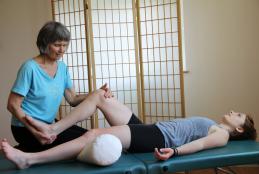
Sessions are hands-on, individualized work with a client.
Somatics comes in two forms:
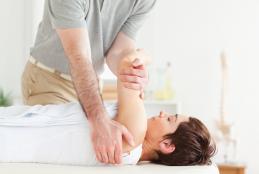
A one-page summary of Somatics Clinical treatment, useful for providing to doctors and insurance companies.
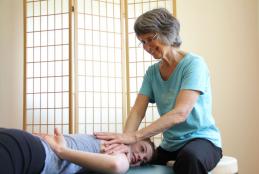
Regular sessions generally last one hour. Your first session will last approximately one hour to one-and-one-half hours.


